

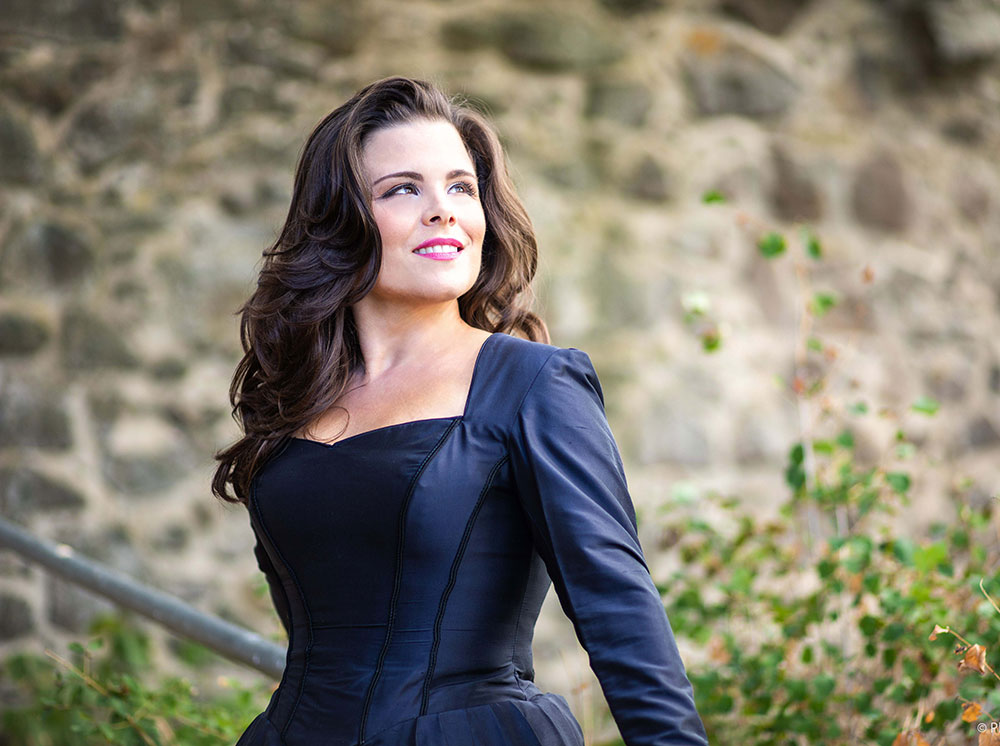
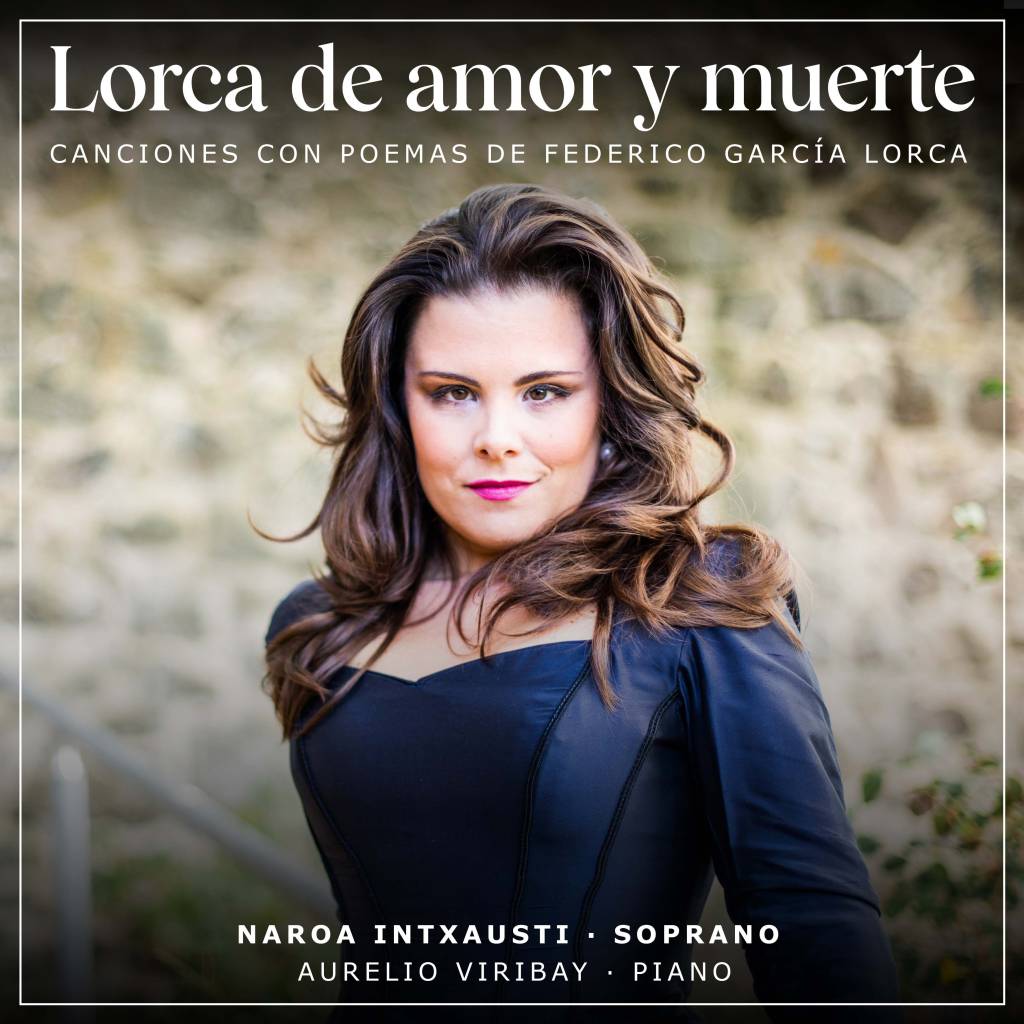
– The Basque soprano immerses herself in the universe of the most influential poet of the Generation of ’27 with Lorca de amor y muerte, giving voice to texts set to music by Miguel Asins Arbó, Hermes Luaces, Borja Mariño and Elisenda Fábregas, an album she presents on October 3rd at the Ambigu of the Teatro de la Zarzuela.
“The art song is more alive than ever,” confesses Naroa Intxausti, a Bilbao-born soprano with a consolidated career on European stages, when speaking about Lorca de amor y muerte (Cezanne Producciones), the title carried by her first recording made alongside that expert in the genre, pianist Aurelio Viribay.
The album revolves around the work of Federico García Lorca, without a doubt one of the most set-to-music poets of the Generation of ’27, “and includes songs by three contemporary composers and one contemporary composer of great relevance today, of styles very different from each other, and who have been inspired by texts from different periods of Lorca, one of the aspirations of this recording,” adds the singer. “The project was conceived following a recital we offered together with Aurelio Viribay at the Bilbao festival Musika-Música, which in its 2023 edition was titled Notas y Letras, with a program that included songs with texts by Lorca; logically there was no space to include all the music that has been composed with texts by the great poet from Granada, but we were thrilled with the idea of recording an album in which we could broaden that horizon; after months of research we had some premises clear: on one hand we wanted to focus on works of new creation, by current or contemporary composers, and preferably unpublished; it is important that the public knows and understands that the art song is still current, with authors who compose music inspired by poets as important as Federico García Lorca, Rafael Alberti or Antonio Machado.”
Miguel Asins Arbó (1916-1996), a Barcelona composer inscribed in the Valencian musical tradition, is the only one of the authors included on the album who is not alive. Intxausti clarifies that he is known above all for “being the composer of soundtracks for such fundamental titles of Spanish cinema as El Cochecito (1960, Marco Ferreri), Plácido, El Verdugo and La Vaquilla (1961, 1963 and 1985, Luis G. Berlanga).” Included from him is Tres romances gitanos (1979), inspired by the celebrated poems from Lorca’s Romancero gitano written between 1924 and 1927, “a jewel immersed in the gypsy culture of Andalusia that Lorca smeared with sorrow and unease; Asins, with great mastery and success, sets to music the popular La casada infiel, La monja gitana and Romance de la luna, luna.”
Tres gacelas de amor y de muerte (2014), by the prominent Madrid composer Hermes Luaces (1975), sets to music poems from the book Diván del Tamarit that the Granada writer crystallized in the period prior to the Civil War and which was published posthumously, in 1940, in Buenos Aires and New York. They are works that faithfully depict the transcendental themes of love and death, and “between gacelas (referring to love and eroticism) and casidas (mainly referring to death), forms that constitute an explicit homage to the historic Arabic poetry cultivated in Granada,” comments the musicologist José Luis García del Busto in the album’s repertoire notes.
The Galician Borja Mariño (1982) treasures behind him an important background as a composer, beyond his consolidated career as a rehearsal pianist in theaters throughout Spain, from whom his cycle Vaqueros en Nueva York (premiered in Madrid in 2024) is included, which groups four songs that combine two early poems by Lorca (La balada del mar and Veleta) written in his hometown, Fuente Vaqueros, and published in the Libro de poemas (1921), with two others (Vals en las ramas and Muerte) created in the city of skyscrapers where he began, in 1929, his avant-garde and popular book of poems Poeta en Nueva York, which he finished in Cuba in 1930 and which would be published posthumously, in 1940. Finally, Cinco canciones (1986), by Elisenda Fábregas (1955) – a renowned Catalan composer who has mainly developed her professional career in university and musical centers in the United States and South Korea – saw the light in 1988. Three of these pieces (El silencio, Las seis cuerdas and Clamor) set to music the Poema del cante jondo by Lorca published in 1931 but written in 1922 on the occasion of the emblematic Concurso de cante jondo organized by Manuel de Falla in the Plaza de los Aljibes of the Alhambra in Granada – with the participation of Lorca and celebrated painters of the time – to rescue the primitive Andalusian cante that was on the verge of disappearing; to these pieces are added La luna negra, which was later included as an additional poem of the aforementioned Poema del cante jondo and La mano imposible from the commented book of poems Diván del Tamarit.